 Tel:+86 18803173989
 Email:

It is common to find damaged roofs at industrial plants and logistics warehouses during strong winds and typhoons. Roof panels get blown off, seams exposed, and roof entire roof systems get compromised. Besides impacting the economy with facility downtimes and damaged cargo, employees are at risk as well.Many people wonder: why do seemingly solid roofs fail in strong winds? Where are the weak links? The truth is, the wind resistance of insulated roof panels relies 30% on the product itself and 70% on proper installation. Hebei Zhongtian Weiye Technology Co., Ltd., a professional manufacturer with 15 years of experience, will delve into how to maximize wind resistance during installation, building a solid defense for your roof.
Understand Modern Insulated Roof Panels: The Foundation of Wind Resistance
Today's insulated roof panels utilize a "metal face + core insulation + metal back plate" construction. Each layer provides the required strength and insulation. Structural support comes from the metal panels, additional insulation and stability come from the dense core layer, and the integrated design provides the insulation layer and metal back plate. Their wind resistance doesn’t come from the panel alone but from a complete system—including the panel’s inherent strength, connectors like fixing screws and hidden buckles, and professional sealing. Our company’s insulated roof panels use high-strength aluminum-zinc coated steel or stainless steel for the surface, paired with high-density rock wool PIR or PUR core materials.The panels are made to resist wind pressures and uplifts because of the shear and compression resistance that the combination of these materials provides, along with great thermal insulation.
User Pain Points: Why Do Well-Chosen Panels Still "Fly Away"?
Many users find that even carefully selected insulated roof panels fail in strong winds, often due to these issues. Design flaws such as incorrect load calculation or ignoring areas with enhanced local wind pressure like corners and eaves can lead to weak spots. Installation traps are more common: using fasteners with insufficient length or diameter, spacing them too far apart, improper application of sealant that allows wind to seep in and create internal uplift, or substandard panel lapping that leaves weak gaps. Maintenance blind spots also play a role—loose fasteners and aging seals go unnoticed and unrepaired, reducing wind resistance over time. These problems remind us that good products alone aren’t enough; scientific installation and regular maintenance are essential to maximize the wind resistance of insulated roof panels.
Market Overview: Opportunities and Risks Behind Product Selection
The insulated roof panel market offers a wide range of products, from those meeting basic standards to high-performance certified options. Low-cost competitors often cut corners on material thickness, coating quality, and fastener reliability, leaving roofs vulnerable to wind damage. Understanding standards and certifications is crucial—international credentials like FM Approval and wind uplift test certifications directly reflect a product’s wind resistance. Our company’s insulated roof panels have passed rigorous wind uplift tests, withstanding wind pressures of up to 2500 Pa, and hold ISO 9001, CE, and EU CE-ROHS certifications. Unlike inferior products that only meet minimum requirements, our panels are engineered for extreme wind conditions, giving users peace of mind.
Wide-Ranging Applications: High Wind Resistance Scenarios for Insulated Roof Panels
Insulated roof panels with robust wind resistance are essential in many situations. They are suitable for wind-sensitive industrial buildings like petrochemical, power and aerospace plants, and warehouses where operational safety is imperative. They are also used in large public buildings like stadiums, exhibition centers, and airport terminals, where a consistent wind load is exerted over large roof areas. They are also used in logistics and cold chain hubs to protect internal assets and keep temperatures steady.They’re also a must for buildings in coastal and windy regions facing typhoons or strong monsoons. In each of these instances, the designed wind resistance rating and the longevity and safety of the building rely on professional construction.
Professional Solutions: Our Company’s Systematic Windproof Approach
Hebei Zhongtian Weiye Technology Co., Ltd. offers a comprehensive windproof solution combining product strength and technical support. Our insulated roof panels feature high-quality substrates like high-strength aluminum-zinc coated steel, ensuring panel rigidity. The dense, high-strength rock wool PIR or PUR core provides excellent shear and compression resistance, supporting overall panel stress. Our patented connection system, including hidden fixing and enhanced exposed fastener options, effectively distributes wind loads. Technically, we provide pre-installation analysis based on local wind pressure maps, building shape, and height, offering load calculation and detailed fixing design. We supply comprehensive installation manuals with diagrammed guidance for key nodes like ridges, eaves, and skylight surrounds. Our multi-layer airtight sealing system, from specialized gaskets to joint sealants, prevents wind infiltration. Backed by international certifications and third-party wind uplift test reports, our products deliver proven performance.
Action Guide: Five Windproof Enhancement Steps During Installation
Step 1: Planning and Preparation
Verify installation drawings, confirm local wind zone classification, and inspect purlin systems for flatness and stability. Our company’s technical team is able to support you in calculating wind loads so that insulated roof panels and fasteners can be aligned to project specifications.
Step 2: Initial and Boundary Fixing
Due to the possibility of the wind uplift most first row of insulated panels and perimeter areas will be needing double fastening. To strengthen the connections better windproof clips are to be added to the corners and eave areas.
Step 3: Main Installation
To prevent uneven distribution of forces, you must comply with the type, amount, and spacing (generally 500-600mm) of fasteners. Do not overtighten or loosen fasteners, and make sure the panel laps are tight. Our proprietary fasteners made of stainless steel are designed for tensile strength and corrosion resistance.
Step 4: Detail and Opening Treatment
Reinforce fixing and apply special sealing around openings like skylights and fans. Use compatible sealants to fill all gaps, preventing wind penetration and uplift.
Step 5: Final Inspection and Documentation
Conduct random pull tests on fasteners, inspect sealant application, and document the installation process. Regular post-installation inspections, especially after extreme weather, help maintain wind resistance.
Conclusion: Choose Professionalism for Long-Term Peace of Mind
A roof that withstands wind is made possible by quality materials, scientific design, and proper installation. The insulated roof panels manufactured by Hebei Zhongtian Weiye Technology Co., Ltd., provide excellent wind resisting panels due to their quality, patented connection systems, and full technical support. Our products and installation instructions guarantee the safety and extended lifespan of your roof, whether you are constructing in the coastal or windy areas. Our commitment to safety and security of your investment is paramount. Our specialists are available to provide technical data, installation wind proofing instructions, and guidance for your specific projects.
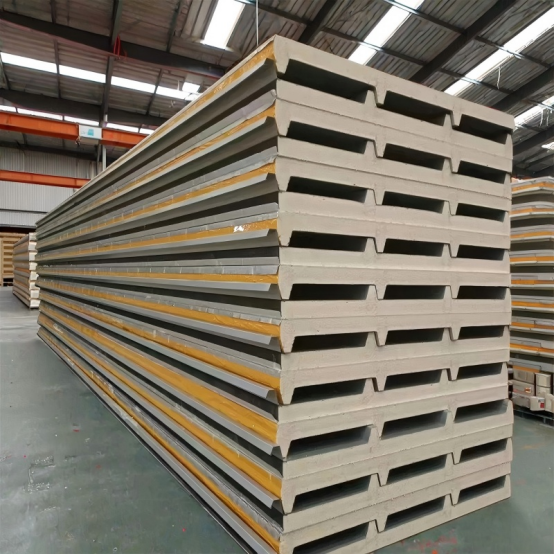
Table of Contents
- Understand Modern Insulated Roof Panels: The Foundation of Wind Resistance
- User Pain Points: Why Do Well-Chosen Panels Still "Fly Away"?
- Market Overview: Opportunities and Risks Behind Product Selection
- Wide-Ranging Applications: High Wind Resistance Scenarios for Insulated Roof Panels
- Professional Solutions: Our Company’s Systematic Windproof Approach
- Action Guide: Five Windproof Enhancement Steps During Installation
- Conclusion: Choose Professionalism for Long-Term Peace of Mind