 Tel:+86 18803173989
 Email:

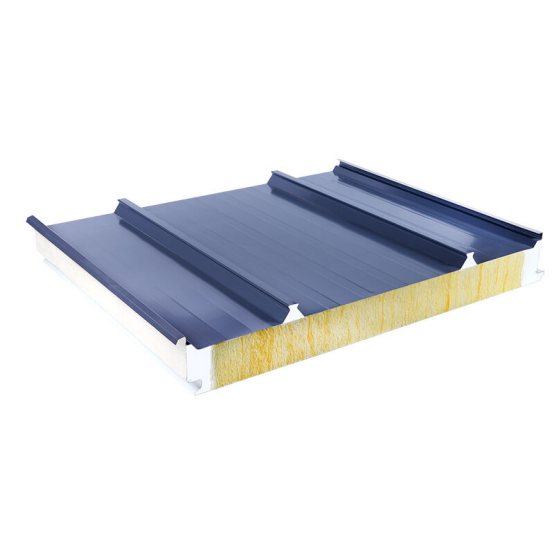
The global initiative for carbon neutrality and renewable energy sources has positioned photovoltaic roof panels as one of the most prominent products in the sustainable construction industry.They not only generate clean electricity but also integrate with building envelopes to provide thermal insulation, making them widely used in industrial plants, commercial buildings, cold storage facilities and residential complexes.Improper installation often results in users not getting the expected energy conversion efficiency from their photovoltaic roof panels.Hebei Zhongtian Weiye Technology Co., Ltd., a leading manufacturer with 15 years of experience, has optimized photovoltaic roof panels for diverse scenarios and summed up professional installation techniques.We will look at the current trends in the industry along with practical examples to show how to install photovoltaic roof panels to get the best results.
Adapt to Application Scenarios and Optimize Installation Orientation
Each application case is accompanied by a distinct set of environmental factors, necessitating specific modifications to the installations. For flat roof large-scale industrial plants and logistics warehouses, photovoltaic roof panels can be arranged in rows with the option to adjust the tilt of the rows. Our company's photovoltaic roof panels are designed modularly to facilitate tilt-angle adjustments of 20°30° to suit the local latitude optimized for solar radiation. In tropical countries, such as Malaysia, where solar radiation is very strong, it is advisable to mount the photovoltaic panels at a slightly higher tilt angle (25°) to minimize the accumulation of dust and the retention of rainwater. For urban commercial buildings where the roof is limited, our compact photovoltaic roof panels harmonize with the roof slopes to achieve energy efficiency and improved aesthetics of the building. The industry proves that with a goal of optimal energy capture through specific orientation and tilt-angle adjustments, there is an energy conversion improvement of 18% in comparison to an unscientific approach.
Ensure Structural Compatibility and Stable Installation
Stable installation is the foundation for long-term efficient operation of photovoltaic roof panels, especially in harsh environments. For coastal areas prone to strong winds or typhoons, our photovoltaic roof panels are equipped with high-strength aluminum alloy brackets and corrosion-resistant stainless steel fasteners, which can withstand wind loads of up to 12 levels. During installation, it’s crucial to inspect the roof structure—our lightweight photovoltaic roof panels (12-15 kg per square meter) are suitable for most industrial and commercial roofs without additional reinforcement.For cold storage facilities with strict thermal insulation requirements, our photovoltaic roof panels integrate with cold room systems. Installation of our panels is stable, and heat dissipation is prevented, due to our waterproof sealing strips located at the panel joint. Our company’s automated production lines provide panels of consistent dimensions. Thus, installation is made easy and loss of efficiency due to poor fitting is avoided.
Avoid Shading and Maintain Proper Spacing
The positioning and design of the roof panels is critical to maximizing the conversion of solar energy into usable power. This is particularly important when dealing with uneven roof structures. For example, guiding the installation of the solar roof panels around large ventilation structures, such as chimneys and vents, is important when the construction is designed in such a way that it provides a possible obstruction for some of the panels. Furthermore, to maximize the potential shading of the panels by one another during the solar installation, it is important to ensure that the distance between the panels is between 30 and 50 centimeters. Detritus from adjacent vegetation may require periodic maintenance, even if the vegetation is not fully grown. The high-transmittance tempered glass with anti-reflective coating, is designed to accommodate minor shading areas so that it can reduce the loss of energy due to minor shading. In the past few years, it has been shown in several reports that if the possibility of shading can be kept to a minimum, the energy conversion efficiency can be improved by approximately 15 to twenty percent. This is the main reason why our installation guidelines prioritize the optimization of site surveys and shading.
Professional Wiring and Equipment Matching
Energy loss can be reduced by using custom matched components and qualified wiring. Our roof photo-voltaic panels are supplied with the junction boxes and wiring of low resistance cables. This means less energy loss in the transport process. During installation, the wiring, especially in Vietnam and Indonesia, needs to be waterproof and of good quality. Areas with high humidity and moisture require specific design considerations to prevent short circuiting. This means choosing the correct inverter is also important. Our engineering team recommends inverters that have an energy conversion efficiency greater than ninety-six percent to make sure that no energy is wasted that is produced by the photo-voltaic roof panels. For the bigger projects like high-tech manufacturing plants we also provide centralized inverter options. String inverters are preferred for the smaller commercial buildings. When components are mismatched, even inverters, we can lose energy, sometimes up to twelve percent. This is why we provide continuous technical support and why we take responsibility for everything, including the design of the wiring.
Regular Maintenance and Efficiency Monitoring
For your photovoltaic roof panels to maintain their energy conversion efficiency, some measures need to be taken after installation. We recommend cleaning panels every three months to get rid of bird droppings, dust, and other debris using soft cloths and neutral cleaning detergents. Our panels are corrosion-resistant and waterproof, however, you should inspect the frames and seals after extreme weather. Users can see their panels’ energy conversion efficiency in real-time through the intelligent monitoring system we provide. Customer feedback showed that with regular maintenance, the photovoltaic roof panels’ efficiency can be maintained at about 90% even after 5 years. Maintenance neglected panels experienced a 25% efficiency drop. Rest assured our after sales maintenance guidance and quick supply of replacement parts will keep your panels working efficiently.In conclusion, installing photovoltaic roof panels for maximum energy conversion efficiency requires adapting to scenarios, ensuring stable installation, avoiding shading, professional wiring and regular maintenance. Hebei Zhongtian Weiye Technology Co., Ltd.’s photovoltaic roof panels, with their excellent quality, modular design and wide applicability, have been successfully applied in projects across 68 countries, including advanced medical equipment plants in Malaysia and technology hubs in Indonesia.With the ongoing expansion of the renewable energy sector, our firm will remain focused on developing new technologies that enable us to offer improved and more efficient photovoltaic roof panel systems and installation services. Our photovoltaic roof panels will cater to your energy requirements, regardless of whether you are constructing a new industrial plant, are refurbishing a commercial building, or are modernizing a cold storage facility. Select our products and professional installation services and take the first step towards a green and energy-efficient future.